The right answer here has almost nothing to do with the food and almost everything to do with how much of the day you want to run yourself. All three approaches can feed a room well. Where they differ is who sets up, who watches the temperature, who refills the trays, and who cleans up while you are trying to enjoy your own party.
Here is a straight comparison, including the parts most caterers gloss over.
The three models, in plain terms
DIY means you cook, or you assemble food from stores and restaurants, and you handle everything on the day. No catering staff involved.
Drop-off (sometimes called delivery catering) means a caterer prepares the food and delivers it in disposable or chafing setups. They drop, maybe do a light setup, and leave. You run the service.
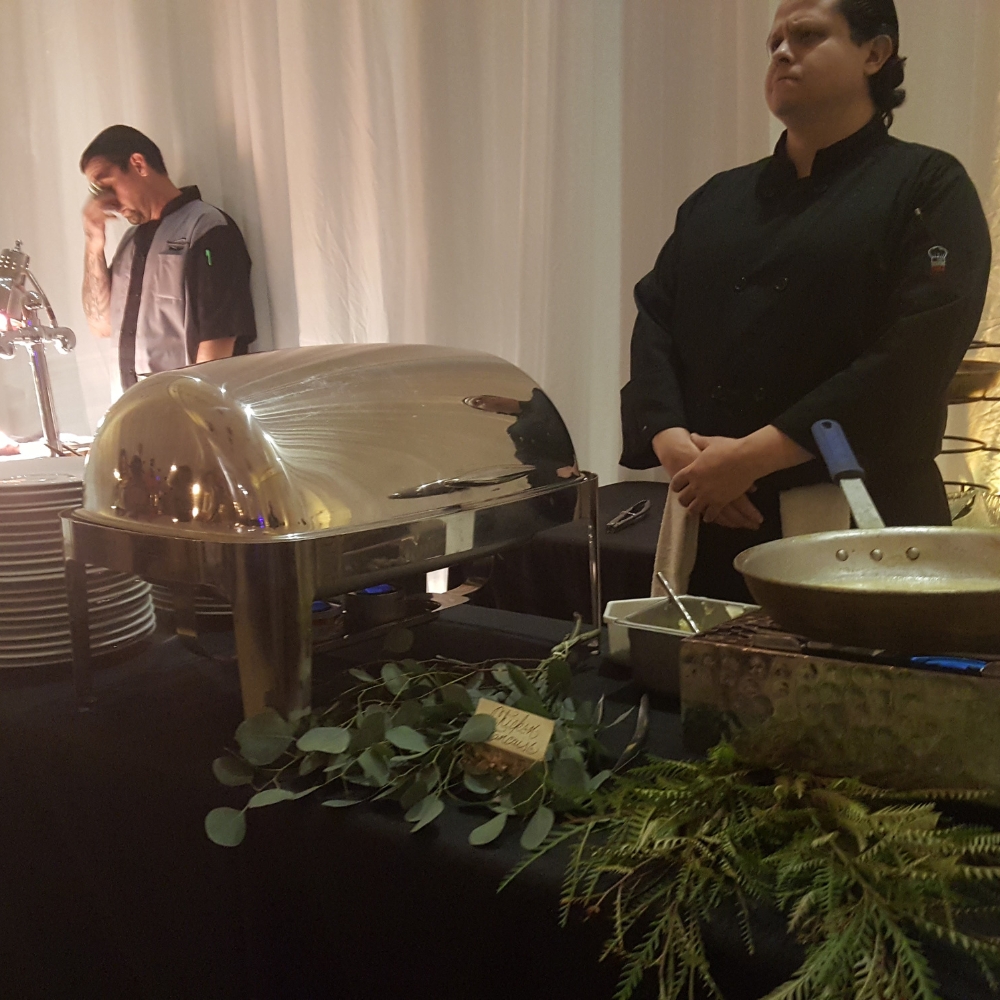
Full-service means a team plans the menu, cooks, delivers, sets up, staffs the event with servers and often a captain, keeps food at safe temperature throughout, replenishes, and breaks down at the end. You show up as a guest.
Staffing: who is actually working your event
This is the real dividing line.
With DIY, the staff is you and whoever you can rope in. That is fine for a backyard birthday. It falls apart fast once you cross fifty guests, because someone has to leave the party every fifteen minutes to deal with food.
Drop-off gives you the food but not the labor. You still need people to set out dishes, keep the buffet stocked, manage trash, and clean. Plenty of hosts underestimate this and end up assigning a cousin to “watch the food” for four hours.
Full-service brings a crew whose entire job is the meal. For a seated dinner or a wedding, that team is the difference between a smooth evening and a host who never sits down. If you are weighing formats, our breakdown of buffet vs. plated service covers how service style changes the staffing math even further.
Stress: what the day feels like
Be honest with yourself about your tolerance here.
DIY is the most stressful by a wide margin, and the stress peaks exactly when guests arrive. You are plating when you should be greeting.
Drop-off is medium. The cooking is off your plate, but the logistics are not. If your event is casual and you have a couple of reliable helpers, it is manageable.
Full-service is the low-stress option, and that is most of what you are paying for. A good team handles the hundred small problems you never see. That is also the argument in the benefits of hiring a professional caterer — the value is in the problems that never reach you.
Food safety in the desert: the part nobody wants to talk about
Las Vegas changes this conversation. In summer, an outdoor event can sit above 100 degrees for hours, and the danger zone for perishable food starts at 40 degrees. Food left out in that heat becomes a real health risk fast, not a theoretical one.
DIY is where this goes wrong most often. Home cooks rarely have commercial chafers, ice wells, or the habit of checking internal temperatures. Trays of protein, dairy-based sides, and cut fruit sitting in the sun are a common way to end a good party badly.
Drop-off is better because the food arrives at temperature, but once the caterer leaves, holding it safely is on you. If nobody is refreshing ice or fuel under the chafers, the clock is still running.
Full-service is the safest by design. The crew holds hot food hot and cold food cold from arrival to breakdown, and they monitor it because that is their job and their license. For anything outdoors in warm months, this matters more than any menu decision. If you are planning outside, read our guide on planning a memorable outdoor event with catering before you commit to a format.
Guest experience: what people remember
Guests notice service more than they notice recipes. A drop-off buffet that runs out and never gets refilled reads as “they ran out of food,” even when there was plenty in the kitchen. A full-service line that stays stocked, clean, and moving reads as generous.
Plated, staffed dinners create the strongest impression of care, which is why formal events lean that way. Our formal dinner catering service exists for exactly those occasions. DIY can absolutely feel warm and personal at a small gathering, but it rarely feels polished at scale.
Dietary needs and last-minute changes
DIY and drop-off both struggle when a guest shows up with an allergy you did not plan for. There is no chef on site to adapt. Full-service teams can label allergens, keep dishes separated, and adjust on the fly. If your guest list includes vegan, gluten-free, or other restrictions, see how we handle special dietary needs, and know that a staffed event gives you room to solve surprises in the moment.
So which one should you pick?
A quick way to decide:
- Small, casual, low stakes, and you enjoy hosting? DIY or drop-off is reasonable. Keep it out of direct summer sun.
- Medium event where you want to actually attend it? Drop-off if budget-conscious and you have helpers; full-service if you do not.
- Weddings, formal dinners, corporate events, anything outdoors in the heat, or a guest list over about fifty? Full-service. The staffing, food safety, and guest experience all point the same direction.
When you are ready to talk through your specific event, get in touch and we will help you figure out the right level of service, or browse the menu to see what we build for each style.
Next, read Buffet vs. Plated Service: What’s Right for Your Event? to choose how the food actually gets to your guests.