
Once you have decided to work with a caterer, the next real question is how the food reaches your guests. Buffet and plated are the two most common answers, and they create very different events. Neither is better across the board. The right choice depends on your room, your schedule, and the mood you want.
Here is how they actually compare, including the trade-offs each one hides.
How each one works
A buffet sets up stations where guests serve themselves, or are served by staff behind the line. People get up, move through, and choose what they want.
A plated meal (also called seated or served service) means guests stay at their tables and servers bring pre-portioned courses to them. The kitchen decides the plate; guests usually pick from a small set of pre-selected options.
Stations sit somewhere between the two, and family-style is its own thing again. If you want the fuller map, we cover all four in choosing the right catering style.
Flow and room layout
Buffets need floor space and a traffic plan. You want the line accessible from multiple sides where possible, away from the entrance, and clear of the dance floor. In a tight room, a single-sided buffet can back up into a slow shuffle, and guests at the far tables end up waiting the longest.
Plated service needs less open floor because nobody is walking, but it needs more from the servers. The room has to be laid out so a team can move between tables cleanly with full trays. If your venue is unusual or you are working with limited kitchen access, that logistics question gets bigger. Our note on Las Vegas venues that allow outside catering covers what to confirm about space and back-of-house before you lock in a format.
Timing: which is faster
This surprises people. For large groups, a well-run buffet with two service lines often feeds a room faster than plated service, because dozens of guests move at once instead of waiting for servers to reach every seat.
But buffet timing is less predictable. Early tables eat while later tables are still in line, so the room finishes eating at different times. That makes toasts and programming harder to schedule.
Plated is slower to physically deliver, but it is far more controlled. Everyone is served in a tight window, everyone finishes around the same time, and you can time speeches, the first dance, or a keynote to the minute. If your event runs on a program, plated buys you that precision.
Formality and mood
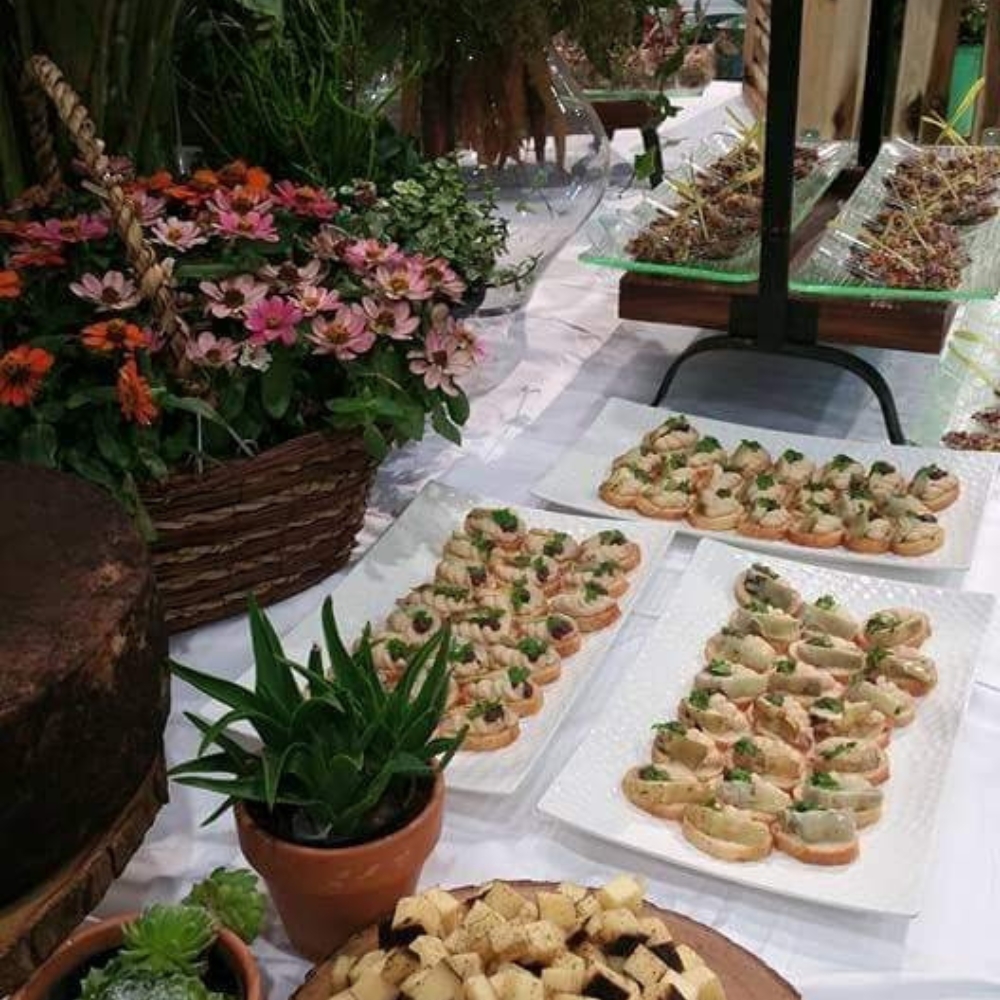
Buffets feel relaxed, social, and abundant. Guests mingle, go back for seconds, and the energy stays casual. That suits corporate lunches, celebrations, and receptions where mingling is the point. It is a natural fit for a lot of corporate and office events.
Plated service feels formal, intentional, and elegant. The room is calmer, the presentation is tighter, and it signals that the meal is an event in itself. That is why it dominates weddings and formal dinners. If you are planning a reception, our wedding catering and formal dinner services are built around seated service.
Dietary needs and portion control
Plated service handles dietary restrictions cleanly. Because the kitchen builds each plate, allergy meals and special diets can be prepared separately and delivered to the right seat without a guest having to hunt through a line and guess what is safe.
Buffets are more flexible for the average guest — pick what you like, skip what you don’t — but harder to control for allergens, since dishes sit near each other and serving utensils travel. Clear labeling helps a lot. Either way, plan restrictions in advance; see how we approach special dietary needs.
Portioning differs too. Plated meals control quantity exactly, which reduces waste and keeps the meal predictable. Buffets are generous by nature, which guests love, but you plan for a bit more food because appetites vary at a self-serve line.
Staffing and the guest experience
A plated dinner needs more servers on the floor, working in a coordinated push. A buffet needs fewer floor staff but attentive people behind the line keeping it stocked, clean, and moving. A buffet that runs dry reads as scarcity even when the kitchen is full, so replenishment is the whole game.
Both live or die on service. Food that sits too long, a line with no one tending it, or courses that arrive cold undo a good menu. That is the case for staffed, full-service catering generally, which we compare in full-service vs. drop-off vs. DIY catering.
Quick way to decide
- Choose buffet if: the event is social and casual, you want variety and abundance, guests will mingle, and a tight program is not the priority.
- Choose plated if: the event is formal, you are running a schedule of toasts or programming, you want controlled portions, or you have several guests with allergies to manage precisely.
- On the fence? Stations or family-style can blend the social feel of a buffet with more polish. Talk it through with us.
There is no universally correct answer, only the one that fits your room, your timeline, and the feeling you want your guests to leave with. When you know roughly which way you lean, reach out and we will tailor it, or look at the menu to see how each style comes together.
Next, read Full-Service vs. Drop-Off vs. DIY Catering to decide how much of the day you want to run yourself.