
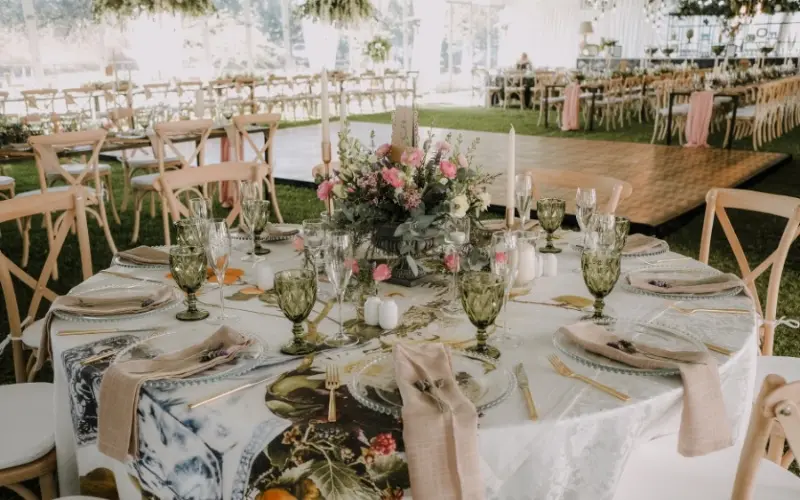
Fifty guests is the count where casual planning stops working. Thirty people you can feed out of a home kitchen if you push it. At fifty, the math changes: you need real portion planning, a service style that fits the room, and enough hands to keep the food moving. Get any one of those wrong and people wait in line, run out of the main dish, or eat cold food off a buffet that nobody refreshed.
We have been feeding Las Vegas since 1985, everything from a dozen guests at a backyard dinner to conventions filling a center hall. So this is not a listicle. It is how our team actually plans catering for 50 people, and how we scale the exact same logic up to 100 or down to 30 without guessing.
How Much Food for 50 Guests
Start with protein, because that is what runs out first and what people notice most.
A reliable planning figure across the industry is roughly half a pound to one pound of food per person total, with protein landing somewhere between six and eight ounces for buffet service and closer to four to six ounces for a plated meal. That range is standard foodservice guidance, not a Vegas thing (WebstaurantStore’s protein portion guide lays out the same numbers). For a group of 50, plan on the higher end if the crowd skews toward big appetites, an evening event, or a menu built around one hero protein.
Two adjustments matter more than the base number.
First, buffets need more food than plated dinners. When guests serve themselves, they take more, so a buffet for 50 people typically calls for around 20 to 25 percent more food than the same menu plated. That is not waste, it is how self-service works, and planning for it is the difference between a table that looks generous at 8 p.m. and one that looks picked over.
Second, order in cooked weight, not raw. Meat loses roughly a third of its weight during cooking, so eight ounces on the plate does not mean eight ounces off the delivery truck. This is one of the most common places DIY planning goes sideways. A caterer builds the shrink into the order automatically, which is part of why the counts hold up.
Then add a buffer. We plan about 10 to 15 percent over the confirmed headcount, heavier on proteins and the crowd-pleaser sides like pasta and potatoes. For 50 confirmed guests, that means we are cooking for closer to 56 or 57. The extras cover second trips through the line and the two or three people who show up without an RSVP, and somebody always does.
Scaling the Same Math to 30, 60, and 100
The per-person logic does not change with the guest count. The staffing, equipment, and timing do.
Catering for 30 people sits in an easy zone. One protein, two or three sides, and a dessert will carry the meal, and a single well-run buffet line or a family-style setup keeps everyone fed without a crowd forming. Family-style works especially well here because 30 guests fit at a handful of tables, and passing platters feels warm rather than chaotic.
Sixty guests is really the 50-person plan with one adjustment: a second serving point. One buffet line for 60 people creates a wait; two shorter lines, or a buffet plus a carving or pasta station, clears the room in half the time. The portions per head stay the same.
Catering for 100 people is where full-service infrastructure earns its keep. You are now looking at multiple service points, more staff on the floor, and menu choices that hold quality across a longer service window. Our team plans events at this scale regularly. One documented example on our events page was a 100-guest dinner built around Chicken Francaise with its lemony golden crust, slow-braised beef brisket, and orzo, finished with a spread of petite desserts. Same portion math as a 50-guest event, executed with the staff and stations that a room of 100 needs.
If you remember one thing: the amount of food per person is roughly constant from 30 to 100, but how you serve it has to scale.
Menu Ideas for 50 That Travel and Serve Well
A menu that photographs well is not the same as a menu that holds up across 90 minutes of service. For 50 guests, the winners are dishes that stay good in a chafing dish or on a station and do not collapse if service runs long.
Buffet and station menus are the workhorses here. Think a carved or braised protein, a lighter chicken or seafood option, one hearty pasta or grain, a couple of vegetable sides, and a bread. Build-your-own stations pull double duty: a taco or fajita bar, or a pasta station, lets guests customize while spreading the crowd across the room. For casual outdoor events, smoked brisket, pulled pork, ribs, and grilled chicken travel well and feed a group generously.
Family-style changes the feel entirely. Instead of a line, platters go to the table and guests pass them, which suits rehearsal dinners, milestone birthdays, and smaller weddings where you want people talking, not queuing. You can see how we set that up on our family-style and buffet service page.
Plan the dietary needs before you plan the garnishes. For a group of 50 you will almost certainly have vegetarians, and likely someone who eats fully plant-based or avoids gluten. We build dedicated options rather than afterthoughts, including a 100 percent plant-based vegan menu, and we label allergens at the point of service so nobody has to interrogate a chafing dish. It is easier to plan two thoughtful alternatives up front than to improvise a plate when a guest tells you at the door. Our full range is on the catering menu.
Buffet vs Family-Style vs Plated for About 50
The service style you pick drives your staffing, your timing, and how the room feels. Here is how the three compare at roughly this size.
A buffet for 50 people is the most flexible and the most forgiving. It handles mixed appetites and dietary needs well, moves quickly with one or two lines, and needs a lighter floor crew because guests serve themselves. The tradeoff is that it uses more food (that 20 to 25 percent bump) and the room needs space for a line that does not back into the seating.
Family-style lands in the middle. It feels generous and personal, keeps guests seated, and paces the meal naturally. It asks for more table space for the platters and a bit more attention from servers refilling them, but for the right event it is the warmest option in the room.
Plated, sit-down service is the most formal and the most controlled. Portions are exact, the timing is precise, and the presentation is tight, which is why it suits weddings and formal dinners. It also carries the highest staffing load, because plated meals move on a server-per-tables ratio rather than a guests-per-line one. We lay out how we run these on our plated and sit-down dinners page.
On staffing for about 50 guests, the rule of thumb tracks the style. A buffet runs lean, often a small floor team plus someone tending each line. Family-style needs a few more hands to keep platters full. Plated service needs the most, because someone is carrying and clearing courses on a schedule. There is no single magic number, and any caterer who quotes you a staff count without asking your style and venue is guessing.
Headcount Planning: Confirming Counts and Building in a Buffer
Your final number drives everything downstream, so pin it down before the menu is locked.
Get a confirmed count as your baseline, then decide your buffer on top of it rather than padding the RSVP number and hoping. We plan food for 10 to 15 percent over the confirmed headcount, but we plan seating and rentals for the true expected attendance. Those are two different numbers and mixing them up is how you end up with enough food and not enough chairs.
Watch the “plus-ones” and the day-of walk-ins, which hit some event types harder than others. Corporate lunches and open-invite gatherings drift upward; a seated wedding with assigned tables usually holds. Tell your caterer which kind of event you are running, because it changes the buffer we recommend.
And confirm the venue’s constraints early. Kitchen access, load-in, power for warming equipment, and floor space for a buffet line or stations all shape what is possible. In the Las Vegas valley we have worked resort ballrooms, desert estates, and convention halls across Henderson, Summerlin, and the Strip, and every one of them has its own quirks. Knowing them ahead of time is half the job.
Common Mistakes When Planning Catering for 50
The mistakes repeat, event after event.
Under-ordering protein is the big one, usually because someone planned raw weight instead of cooked, or forgot the buffet bump. Running a single buffet line for a group that really needs two is the next, and it shows up as a line that never clears. People also forget beverages and ice, skip a real plan for dietary needs until a guest raises it at the table, and leave the timeline loose so the food is ready 40 minutes before guests are seated.
The quieter mistake is booking too late. Good dates go early, especially in a city that runs on events. Which brings us to the timeline.
Your 50-Guest Planning Checklist and Timeline
- Several weeks to a few months out: Set your date, venue, and rough guest count. Reach out to a caterer, because peak season and large counts book up first. The bigger the event, the earlier this matters.
- A few weeks out: Lock the menu and service style. Do a tasting if you can. Confirm dietary needs and rough numbers.
- About one to two weeks out: Give your confirmed headcount. Finalize timeline, rentals, and floor plan with the caterer and venue.
- A few days out: Reconfirm final counts, arrival and service times, and load-in details.
- Day of: Let the team run it. A prepared crew shows up early, sets the room, and keeps the food moving so you can be a guest at your own event.
That last line is the whole point of hiring a full-service team. You confirm the count and the vision; we handle the portions, the staffing, and the timing so the room runs on schedule.
If you are planning catering for 50 people, or scaling to 30, 60, or 100, tell us your date, headcount, and venue, and we will build a menu and a service plan that fits the room. Voted Best Caterers in Las Vegas, and we still treat your event like the only one on the calendar. Request a custom catering quote.